Designing an experience that truly resonates is an iterative process. In the case of the Hello Series, each product acted as an iteration on an overarching insight about how kids said they wanted to connect with the Barbie character.
Hello Barbie
In 2015, Mattel launched Hello Barbie, one of the first AI-enabled consumer products ever made. Why? Because the #1 ask from kids was to talk to Barbie. When an audience tells you what they want, you listen.
Developed in collaboration with ToyTalk (later called PullString), Hello Barbie used voice recognition and natural language processing to hold genuine conversations based on nearly 9,000 lines of scripted dialogue.
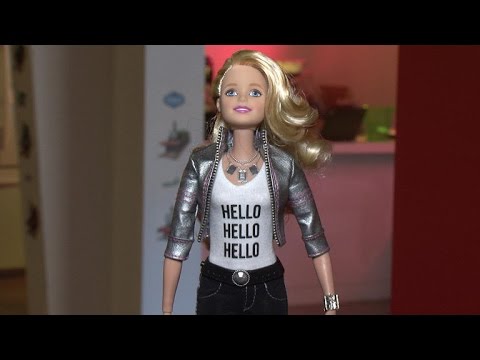
Hello Barbie got people's attention in the press. But what caught my attention was how kids played with her. After several minutes of conversation, kids tended to stop looking at the doll. She became more of a speaker/microphone combination than a vehicle for storytelling. The fact was Hello Barbie was a doll, and her face looked the same regardless of whether she was asking about your future career or telling a knock-knock joke.
So even though kids had asked for a doll they could talk to, their behavior suggested they were looking for something more. That got me thinking...
Hello Dreamhouse

A year later, we brought similar technology into the Hello Barbie Dreamhouse. Smart home devices were appearing in living rooms, so kids were already familiar with voice-activated technology. They knew how to ask for music, turn lights on, make things happen. That sense of control was something they loved. We leaned into that.
The child directed the action. Voice commands triggered different combinations of lights, music, and sound effects across dozens of scenarios: send the elevator between floors, turn the stairs into a slide, throw a dance party or a mermaid-themed celebration or a surprise party with a dramatic lights-out countdown. Set the whole house to a Christmas, Hanukkah, or Halloween mood. The house responded to whatever story the child was telling, and stayed quiet when she wasn't telling one. It didn't push the narrative or interrupt. It waited. That's invisible technology doing exactly what it should: present when you want it, gone when you don't. The result was kids stayed engaged longer because they were in charge, and the toy knew it.

Hello Barbie Hologram
Hello Dreamhouse answered the control question. But there was still something missing in the connection between a child and the Barbie character herself. I wanted children to feel seen (not just heard). The vision I had reminded me of Sea Monkeys.
Remember Sea Monkeys? There used to be illustrated ads in the back of comic books showing a family of creatures posed and waving at you. The mom even had a bow on her head. But when your order arrived, you found they were just little brine shrimp. No bow. No wave. I'm willing to confess this was one of my childhood's greatest disappointments.
Hello Barbie Hologram was an opportunity to right that wrong. Using motion capture and animation, we created a fully realized character: voice-activated, responsive, expressive. You led the interactions, and she followed your lead. You could ask her to tell you the weather, teach you a dance, or challenge you to a jumping jacks contest. She told you that you were smart, that you were a good friend, that she was glad you were there. And yes, she could wave at you.
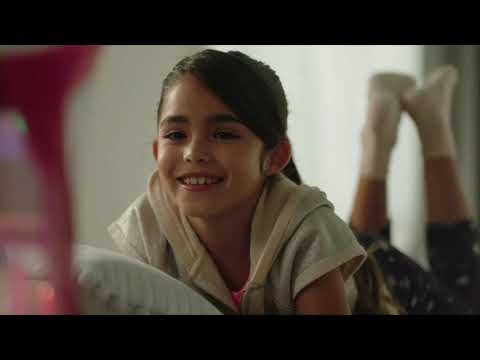
The feature set we landed on was specific to the Barbie character: what she'd say, how she'd move, what kind of relationship she'd build with a child. A different character would need different expressions of the same idea. But the underlying framework (child-directed, character-responsive, with clear experience guardrails instead of an open chatbot) could work for any of them. That's what made it feel like the beginning of something, not just a product.
But some ideas are before their time. Hello Barbie Hologram was featured at the 2017 New York Toy Fair and never launched commercially -- the infrastructure for regular experience updates wasn't in place to sustain it. If Sea Monkeys was my childhood's greatest disappointment, this was a strong contender for adulthood. It's also the work I'm most proud of.
The Hello Series taught me four things I've carried into every project since.
Listen to your audience, but watch what they do. What people say they want and what their behavior reveals are often two different things. The gap between them is where the real insight lives.
Give people control. Agency isn't just satisfying, it builds independence and keeps people engaged longer. A product that tells you what to do will always lose to one that responds to what you want.
Design freedom within a framework. The best experiences aren't open-ended. They do a specific set of things exceptionally well, which makes them safer, less frustrating, and more rewarding for everyone.
People have deep emotional relationships with the characters and brands they love. The more an experience makes them feel genuinely seen, the more powerful it becomes.
None of these are lessons about toys. They're lessons about designing for humans, and they apply anywhere you're trying to create something people will actually love.